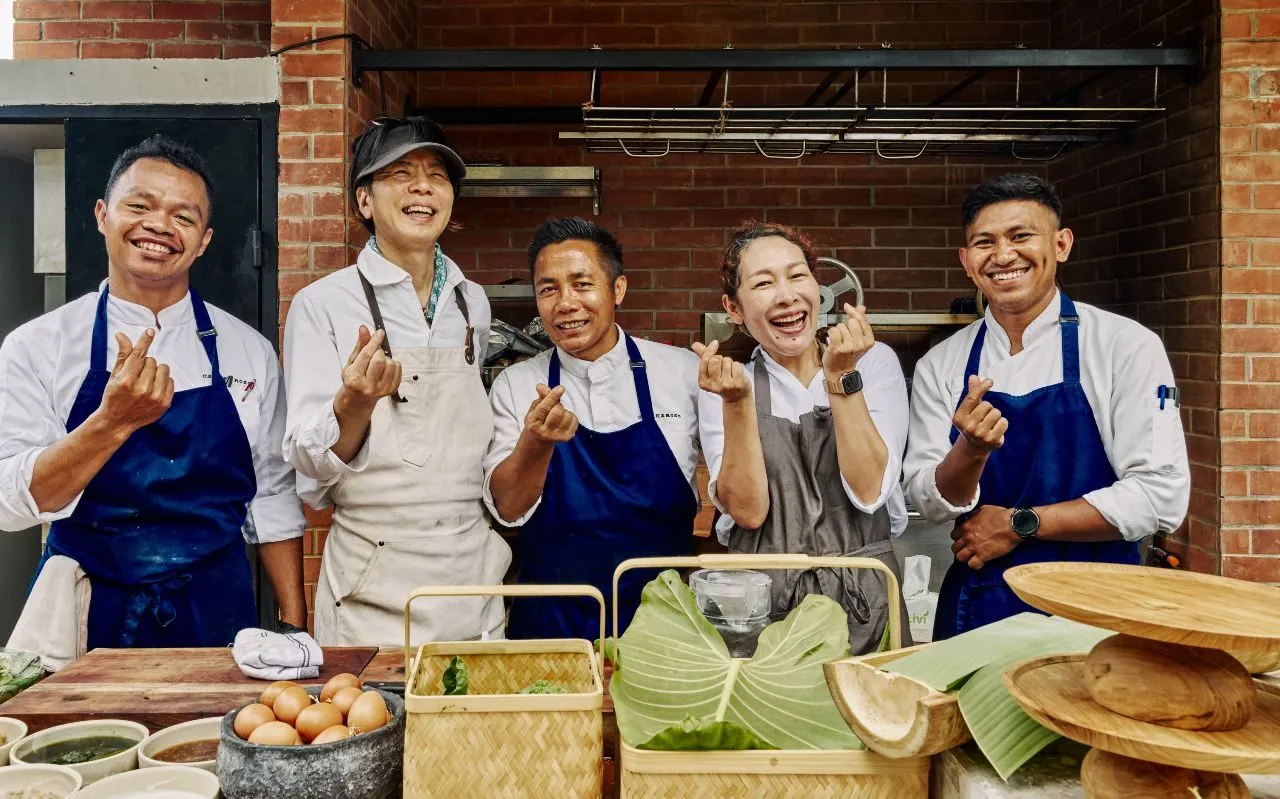
Local cuisine gets a gourmet glow-up as the Sumba Food Festival returns for its second year to the luxe Cap Karoso resort in Indonesia.
Words by Ute Junker • Destination Sumba, Indonesia •
4 min read
Photos by Nicolas Buisson
A longer version of this story first appeared in
Australian Financial Review
The smoke billowing around chef Loic Portalier as he bends over the grill carries the unmistakable aroma of roasting pork. On this balmy night on the Indonesian island of Sumba, the Michelin-starred French chef is doing something very different from the classic French fare served at his Hong Kong restaurant, Louise.
On the grill is Portalier’s vision of what happens when Italian porchetta meets its Balinese counterpart, babi guling: crispy-skin pork with a stuffing that has a hint of seaweed, pork jus and kaffir lime, served with rice and a fragrant, zingy sambal that contains Portalier’s favourite new ingredient, fresh coriander seeds.
“Everyone knows the dried seeds but in the [resort’s] garden we tried the fresh seeds and it’s absolute delicious, with a very, very delicate flavour,” he rhapsodises. It is clear that diners are equally enamoured of the result: not just in the way they wolf down the tender pork slices, but also in conversations with the chef that unfold tonight and over the next few days.
“That connection is the point,” says Fabrice Ivara, co-founder of the luxe Cap Karoso resort, who invited Portalier and nine other chefs from across Asia to take part in the first Sumba Food Festival, an event that celebrates how food brings people together.
“This resort is very intimate, so the chefs are very accessible – you can speak with them in the lobby, by the swimming pool. It’s a money-can’t-buy experience,” Ivara says.
Guests had plenty of opportunities to mingle with the chefs flown in from across Asia for the two-week festival, including Mano Thevar from Singapore’s two-star Thevar, Kanji Kobayashi from Villa Aida, an acclaimed six-seater an hour out of Osaka, and two Bali-based chefs, Syrco Bakker from Syrco Base and Will Goldfarb from Room 4 Dessert.
"Being here is like being in a toy store"
Mano Thevar, chef
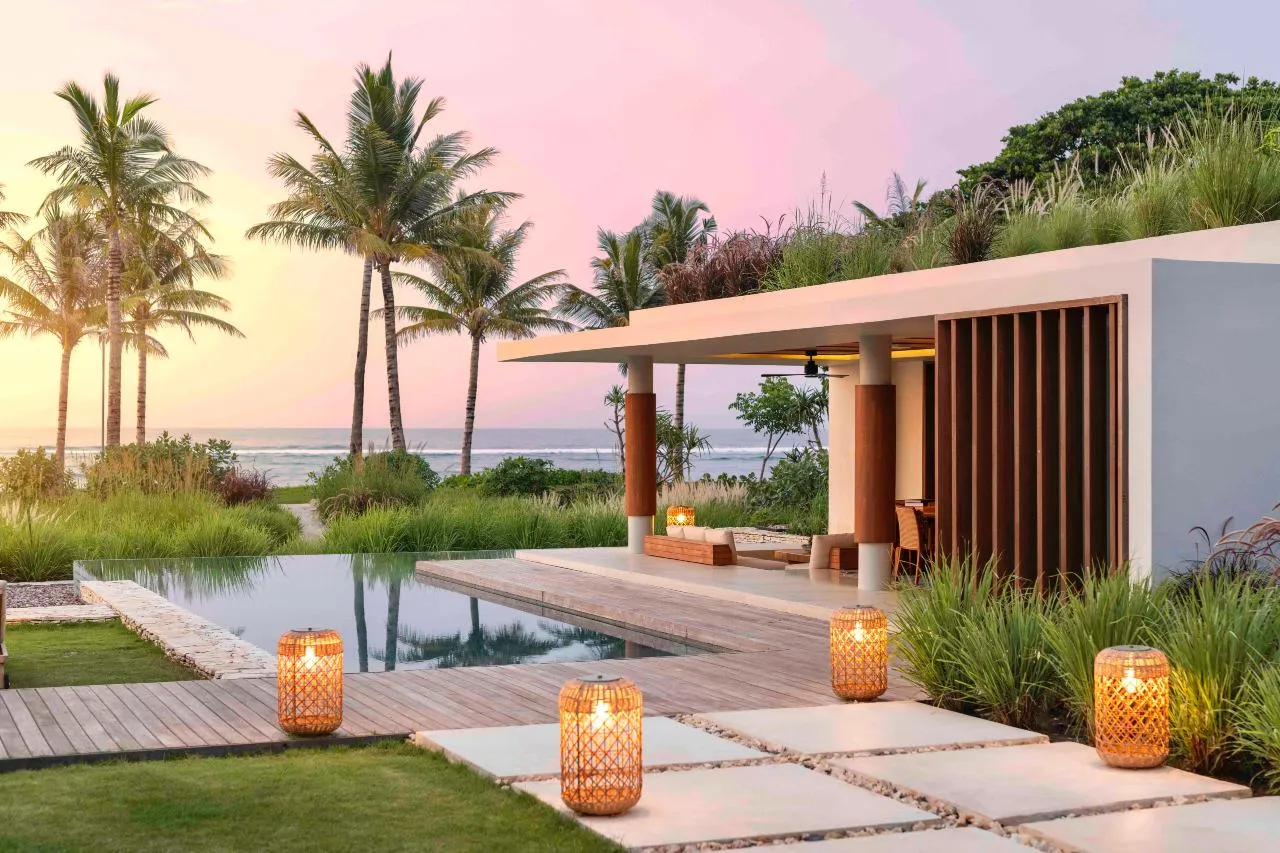
A villa at Cap Karoso, Sumba
They cooked up a storm at beach banquets featuring garam masala snapper and negitoro sushi; at family-style feasts at the resort’s three-hectare farm served under a shady tree; at the helm of cooking classes; and teaming up for elegant four-hand dinners.
Sumba is an unlikely location for a food festival. An hour’s flight from Bali and roughly twice the size of its more famous neighbour, the island is largely undeveloped. Only a handful of resorts operate here and the population of subsistence farmers ekes out a living from the rocky soil. They follow a traditional lifestyle, practicing ancestor worship, living in houses topped with 30-metre high roofs designed to impress the spirits, and engaging in fierce horseback combat during rituals knowns as pasola.
Ivara and his wife Eve opened Cap Karoso – a sleek resort which blends clean modernist lines with traditional Sumbanese design, set on an empty sweep of beach that curves towards the horizon – two years ago, and from the start one of their goals was to help the community. The success of Cap Karoso’s organic farm, where locals can learn new farming techniques, showed that food might provide a path to increased prosperity.
A portion of the Sumba Food Festival proceeds is going to community projects but Ivara, formerly a food blogger in his native France, has bigger plans. He sees Sumba’s produce as a potential income-generator for the islan, and hopes the festival will be a first step in raising the profile of Sumbanese agriculture. His guest chefs are also enthusiastic.
“Being here is like being in a toy store,” says Mano Thevar of the resort’s farm. “You see so many new [ingredients] and you just feel so happy.”
"It’s like wine – different soils create different tastes. "
Mano Thevar

Thevar has just been on the phone to his team back home, raving about the thrill of harvesting banana leaves just steps from the kitchen. “In Singapore, the banana leaves you buy were picked a week ago. They have no flavours compared to these ones.”
Thevar was so excited about the produce on offer, he added several courses to his farm-table lunch menu at the last minute. “We’re just plucking things, cooking them a la minute. So many aromatics! We use ginger leaf in Singapore but here you have galangal leaf, turmeric leaf, so many different flavours.”
Even Kanji Kobayashi, who also has a farm-based restaurant and who is an enthusiastic improvisor (“the only things I brought with me were my knives and my apron,” he says through Yumi, his wife and translator), admits to being floored by the variety of herbs and vegetables on offer.
“Around half of them I didn’t know,” he says, switching to English to make his point.
Thevar, who grew up in Penang before moving to Singapore, says that even widely-available ingredients taste different on Sumba.
“It’s like wine – different soils create different tastes. And here you are nearby the sea, you have very rocky soil, so the flavour is very intense.” He stops, struck by a thought. “You know what? I just realised now, talking to you, I didn’t season any of my food. I never used any salt. Wow.”
It isn’t just the ingredients that inspired the chefs. One of the most popular events was a cooking contest for locals judged by the visiting chefs. The final featured five talented home cooks fro Sumba competing for a prize pool included 10 million rupiah (almost $1000) and the chance to pitch an idea for a culinary-based business.
The visiting judges were entranced not only by the stories behind each dish – the only woman in the final cooked a chicken curry served with grilled bananas that she learned from her grandmother, who is now 105 years old – but also by the techniques on show.
“One of the guys used meat that they had marinated, cured and then smoked,” says Syrco Bakker, his eyes dancing with delight. “It’s a tradition that comes from the days when they didn’t have fridges. They found a way to preserve the meat which also gives it a lot of flavour. For me it is really interesting – I can’t wait to try it on different proteins and see how it comes out.”
""
Cap Karoso Sumba
Things to know
Frequently asked
Mentioned in this arlticle