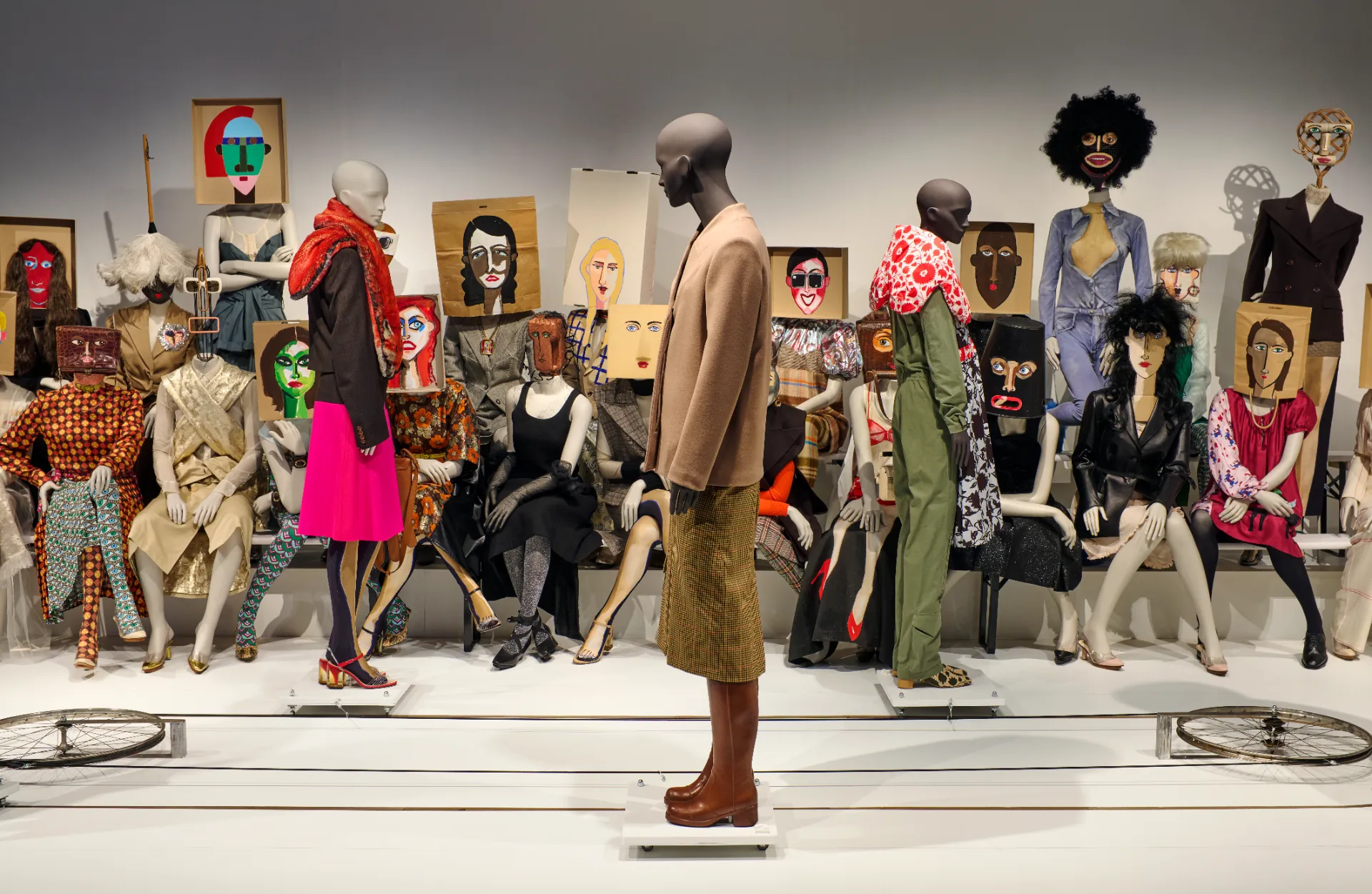
The creativity that drove the Antwerp Six to international renown is alive and well in this Belgian city of just half a million people and 187 nationalities.
Words by Ute Junker • Destination Antwerp, Belgium •
5 min read
Photos by MoMu Antwerp
A longer version of this story first appeared in
Australian Financial Review
Sometimes all you need is a van. Back in 1986, a time when Dynasty-style power dressing was in vogues, six young graduates of Antwerp’s Royal Academy of Fine Arts were keen to show their first collections at the British Designer Show in London. Pooling their resources Ann Demeulemeester, Walter Van Beirendonck, Dries Van Noten, Dirk Bikkembergs, Dirk Van Saene and Marina Yee hired a van, piled it high with their designs, and drove to London, where their deconstructed silhouettes, raw tailoring and subdued colour palettes, unlike anything else on show, were an instant hit.
Forty years on, Antwerp is celebrating the anniversary of the designers now known as the Antwerp Six with a major exhibition at MoMu, the city’s fashion museum. Developed in collaboration with the designers themselves (including Yee, who passed away late last year), the exhibition features not just clothing but sketches, personal objects and other memorabilia.
Spend a couple of days in Antwerp and you will soon realise the creativity that drove the Antwerp Six is alive and well in this city of just half a million people.
“We are like a little New York,” Antoine Cuypers tells me. The head concierge at the lush Botanic Sanctuary Antwerp hotel, a serene retreat housed in a former monastery in the heart of town, Cuypers knows all the secrets of the city. (When I ask for a shopping recommendation he sends me straight to Garden, a boutique where one of Madonna’s stylists is known to drop in.)
The city’s energy reflects its cosmopolitan nature, Cuypers says. “There are 187 nationalities in this small town, all these different people living together.” Antwerp’s arts and design scene is thriving, he says, and surprisingly accessible for visitors.
You might start with a visit to Milan Henderickx’s high-ceilinged apartment close to the city’s cathedral, which doubles as his home and his exhibition space. As often happens in small cities, Henderickx was able to leverage one big break, which came from an exhibition he curated in a courtyard.
Henderickx worked as both an artists’ assistant and a furniture restorer before deciding to try something different. He invited 14 artists, designers and architects to create planters for the courtyard show.
"There are 187 nationalities in this small town"
Antoine Cuypers, concierge
It was a remarkable success – “I suddenly became ‘the courtyard guy’,” he laughs – and three years on Henderickx’s Cour gallery has regular exhibitions, open Fridays, Saturdays and by appointment. His contact book is impressive: during my visit, exhibits include rubber pendant lights by Manhattan-based Rich Aybar and British furniture designer Lewis Kemmenoe’s wooden patchwork chairs.
“Antwerp is also very connected place,” Henderickx says. “You have Düsseldorf and London and Paris all just a few hours away.”
For Antwerp-based, German-born leathergoods designer Marie Bernadette Woehrl, who previously worked for Ann Demeulemeester, her pivot point was a night out. “I was in a bar wearing a bag I’d made in my kitchen for fun, and Elvis Dhen of [celebrated Antwerp store] Labels Inc saw it and said, ‘Do you want to show in our window?’”
That conversation was the impetus for Woehrl to create her first collection. “It’s a very Antwerp thing,” she says. “When people have the possibility to support you, they will.”
Sitting in Woehrl’s light-filled studio, where she welcomes visitors by appointment, it is clear that her taste leans more cutting-edge than commercial. “I like taking leather, that’s quite a sturdy and stiff and serious material, making it more playful and dynamic. I’m not interested in making another tote bag,” Woehrl says.
She is one of 30 artists to have an atelier in the Ercola building, a rundown complex in Antwerp’s historic heart that is its own creative eco-system. “We are really trying to build out own little universe that stands freely from external factors and proposes almost an alternative reality. This is what the mentality of the city invites you to do.”
When the city announced its plan to sell the building, Ercola’s artist community swung into action and launched a fundraising campaign that raised more than two million euros, which they recently put in as their own bid.
"Antwerp was always a place for appreciating quality"
Alain Hens, gallerist
The Antwerp Six
A walk through Antwerp’s tree-lined streets and medieval alleyways reveals plenty of other studios, boutiques and galleries to explore. (Note that many are open only on weekends.) Kloosterstraat is the headquarters for many of the city’s many vintage stores and furniture studios such as Studio Henk, The Recollection and Galerie Alain Hens, which sells a carefully-curated selection of furniture and art.
“Antwerp was always a place for crafts and appreciating quality,” says Alain Hens. Over a rich red cup of bissap, a Senegalese hibiscus drink, Hens – the son of a Senegalese father and Belgian mother – says the city’s openness to different influences reflects its location. “Antwerp is not an island – it’s in the centre of Europe,” he says.
Hens traces Antwerp’s interest in design all the way back to the 16th century when it was Europe’s commercial and financial capital. The local elite turned spending money into an artform, as demonstrated in intriguing house museums such as the Snijders & Rockoxhuis, historic residences which reveal how the elite lived 400 years ago.
“Ceramics, tapestries, linen, furniture – the best craftsmen came from everywhere, and I think that appreciation has stayed in the DNA,” Hens says.
That appreciation is also on show on the outskirts of the city where one of Antwerp’s key cultural figures, art dealer and designer Axel Vervoordt, has turned an old distillery into an arts and residential precinct known as Kanaal. The industrial architecture, including towering silos and warehouses, has been supplemented with new buildings designed by Vervoordt together with Japanese architect Tatsuro Miki.
Kanaal’s exhibition spaces, including dramatic underground galleries, display permanent installations by James Turrell and Anish Kapoor as well as rotating temporary exhibitions. Guests can pick up a swipe key from reception that unlocks the various, largely unmarked spaces. Less a gallery visit than an “I-wonder-what’s-behind-that-door” adventure, a trip to Kanaal is full of surprises, which makes it a very Antwerp experience.
""
ShowStudio
Things to know
Frequently asked
Mentioned in this arlticle