These new hotels have traded formality for design, connection, and a sense of place.
Words by Ute Junker • Destination Australia •
4 min read
Photos by supplied
A longer version of this story first appeared in
Luxury Travel Magazine
Entrances don’t get more glamorous than this. Arriving at Melbourne’s tallest hotel, the Ritz-Carlton, Melbourne, you pass through not one but two jaw-dropping lobbies. Stroll in from the street and you find yourself in a light-drenched ground-floor lobby that provides a case study in how just a handful of design elements can pack a punch, especially when those elements are a curved brass staircase. a streamlined chandelier and a tranquil pool of water.
Express elevators zip you up to the reception in the sky lobby on the 80th floor, which offers extraordinary birds-eye views across the city and out along the coast. Gazing down at the extraordinary panorama, you know you have arrived in a special space.
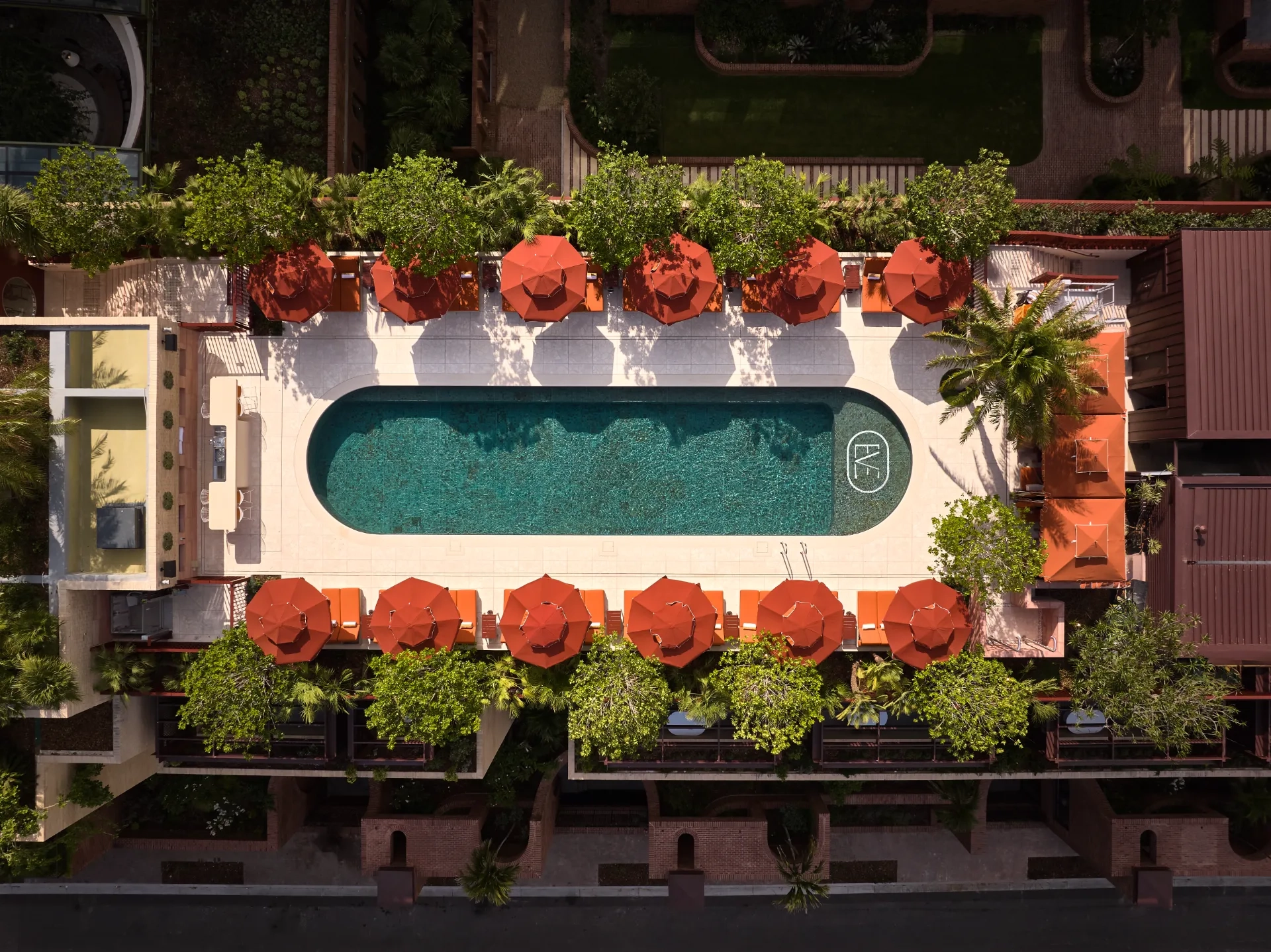
The arrival experience at the boutique property The Eve, in Sydney’s inner-city district of Redfern, is different yet no less memorable. Step through the hotel’s four-metre high doors and you pass through a tiled portal into a low-ceilinged lobby looking out onto a secret garden, beyond which a cloistered corridor leads towards the rooms. It is an unusual design but a deliberate one, according to the hotel’s general manager, Ben Mellor.
“As the ceiling compresses and you move towards the cloisters, it’s a way of shifting your mindset from what may have been a chaotic ride in, to the more serene side of the hotel,” Mellor says. “You can see the way people’s shoulders just drop as they start to relax.”
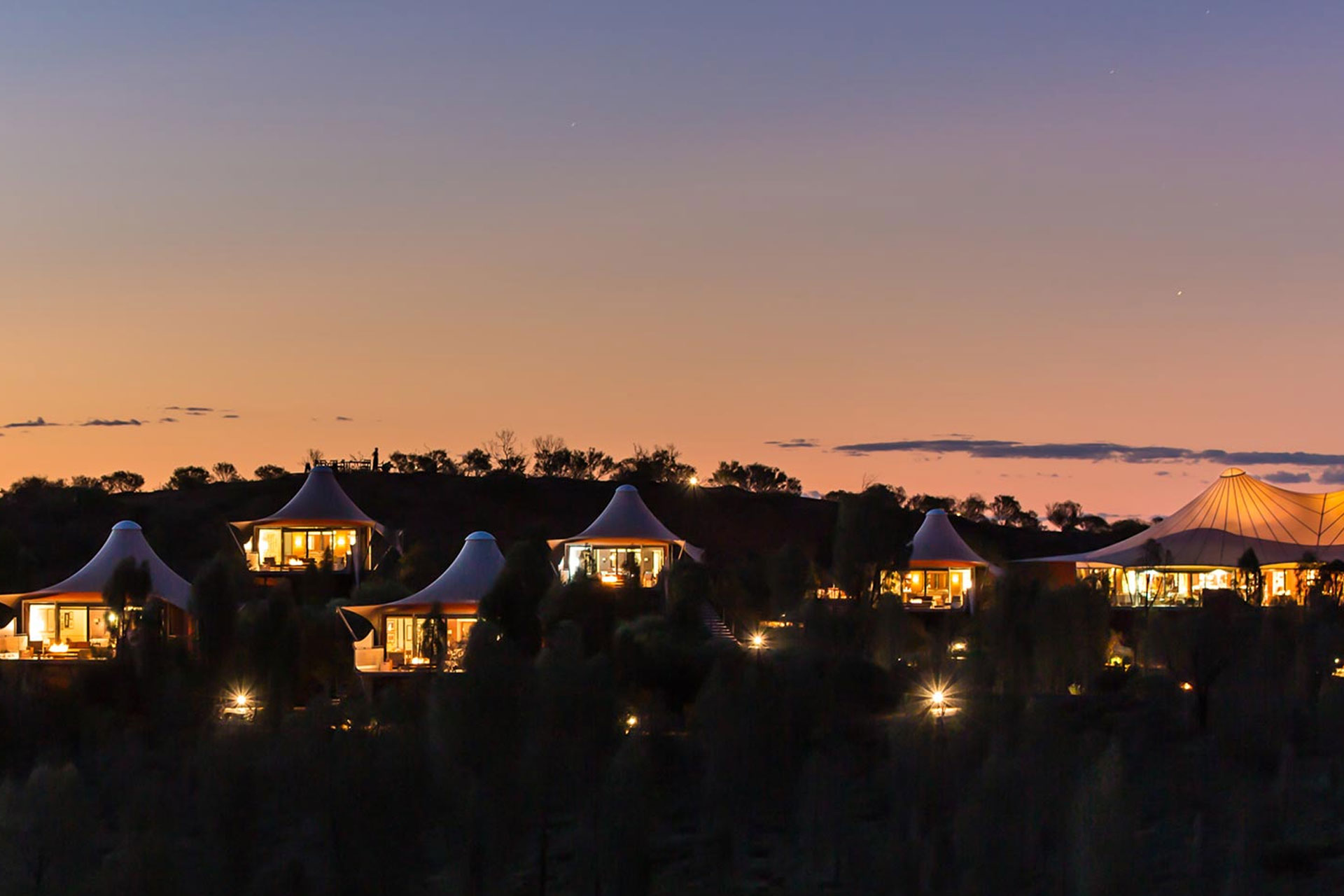
Both properties are part of a post-pandemic wave of high-end openings showcasing a new Australian approach to luxury. All of these new hotels – including pace setters such as Capella Sydney and 25 Hours Hotel The Olympia in nearby Paddington, Sequoia Lodge in the Adelaide Hills, a short drive from the South Australian capital, and the Ritz-Carlton Hotel, Perth – emphasise design, sense of place, and the importance of doing things differently.
It’s been a long time since we saw such an influx of landmark properties. Sydney in particular suffered though a long dry spell: the 2017 launch of the Sofitel Sydney Darling Harbour marked the first new international luxury hotel since the 2000 Olympics.
"It's about what they can do, touch, feel and see"
Rachael Harman
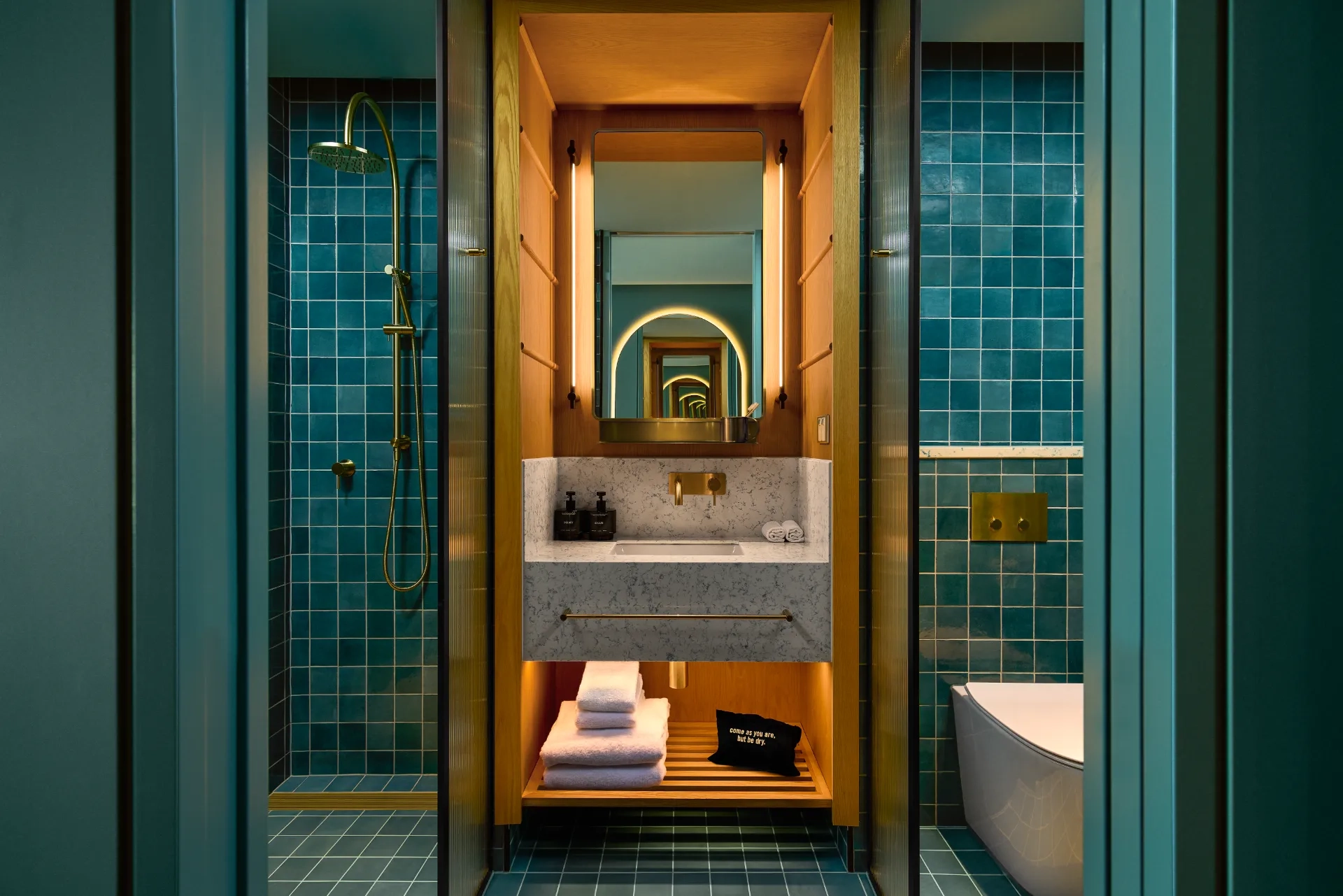
A blue-tiled bathroom at 25 Hours Hotel, The Olympia, Sydney
The last time we saw such an accommodation boom was around 20 years ago, when Australia finally embraced the luxury lodge phenomenon. Qualia Hamilton Island launched in 2007, rapidly followed by Kangaroo Island’s Southern Ocean Lodge in 2008, Emirates Wolgan Valley in the Blue Mountains in 2009 and Tasmania’s Saffire Frecyinet in 2010,
Initially targeting overseas guests, these remote lodges showcased our most spectacular landscapes, providing five-star service to lure big-spending travellers. This time around, the energy and investment is concentrated in and around our capital cities and instead of prioritising white-glove service, hoteliers are creating character-filled retreats that embrace the neighbourhood and appeal to well-travelled locals as much as international visitors.
At 25 Hours Hotel The Olympia, where rooms are styled in two different ways – the bold Renegade look or the softer, more romantic Dreamer – the check-in is modelled after a video store in a nod to the building’s former incarnation as a cinema. (Guests can even borrow actual VHS tapes.)
Over at The Eve, guests sunning themselves by the rooftop pool can partake in a wellness ritual including a tonic from local company Ikkari. “Guests love to learn about the tonics, the [natural ingredients] they are made of, and the fact that they are local,” Mellor says.
Connecting guests with the local community is a priority, a global trend driven by millennials and Gen Z who want to feel part of the scene instead of holing up in their hotel room.
“It is about location, what they can do, touch, feel, and see.” says Rachael Harman, general manager of the Ritz-Carlton, Melbourne. In other words, who wants to have a Nespresso in bed when they could be having a matcha latte at the hippest café in the ‘hood?
Some properties take it further, curating experiences that showcase the surrounding area. At Sequoia Lodge, that includes nature-focused activities such as guided walks and evening stargazing.
""
The ground-floor lobby of The Ritz-Carlton Melbourne
Over in Sydney, guests at the downtown oasis of calm that is Capella Sydney can sign up for bespoke experiences as part of the Capella Curates program, including an architect-led tour of the Sydney Opera House and an indigenous experience hosted by a local elder.
“We invite guests to engage deeply with Sydney’s spirit, uncover its hidden stories, and leave with a genuine sense of connection,” says Capella’s hotel manager, Anthony Metcalfe.
In the age of Uber, a hotel’s location has become all but irrelevant. Who would have guessed a few years ago that we would see a luxury hotel in Redfern? Even The Ritz-Carlton Melbourne’s Lonsdale Street site would have been considered too far from the Paris end of Collins Street.
It is a change that reflects both the growth both in the number of Australians choosing stay-cations, and the fact that more and more international visitors are on their second, third or even fourth visit to the country. First-timers in Sydney may long for a harbourside perch; several trips in, they are ready to try something new.
What is non-negotiable is having great food as part of the offering. Around the world stuffy hotel restaurants have been replaced with buzzy diners beloved by locals and Australia is no exception, with Olympus and Lottie at The Eve and Atria at The Ritz-Carlton, Melbourne all scoring hats in the latest Good Food Guide.
Today’s hotels may offer a very different take on luxe but one time-honoured principle has not changed: nothing beats stellar service. Among the many things to savour at the Ritz-Carlton – including the high-rise pool-with-a-view and the world-class massages – one of my favourite memories is of check-in.
When confirming my departure date, the manager asks if I’d like a late check-out. I would indeed, I say, mentioning that my flight doesn’t leave until late afternoon. When I ask if a 2.30pm checkout might be possible, he smiles. “Let’s make it 3pm,” he suggests. Now that is true luxury.
""
The Eve Hotel
Things to know
Frequently asked
Mentioned in this arlticle