Why Berlin’s underground art scene is the best in the world
Underground bunkers, abandoned buildings and repurposed spaces host some of the city’s most unlikely arts adventures
Words by Ute Junker
Photos supplied
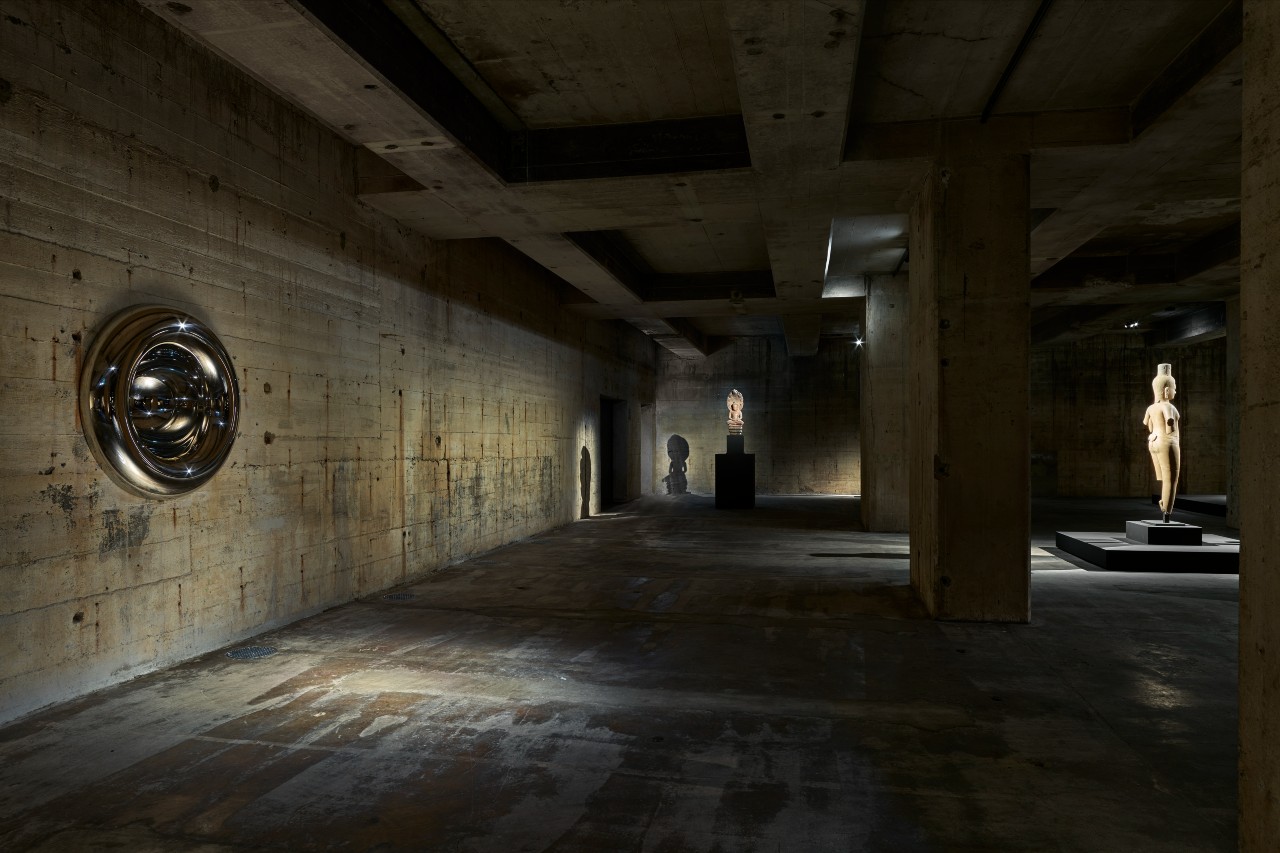
Don’t go planning a visit to the Feuerle Collection if you are afraid of the dark. Getting to see one of Berlin’s most intriguing private art collections is challenging in a number of ways – the subterranean gallery is open by appointment only and is so discreetly signposted, it can be hard to find the entrance.
But it is the full-darkness immersion at the start of the tour that is most confronting for some visitors. Guests only spend a few minutes in the small, totally lightless chamber, but the feeling of disorientation that comes from being plunged into absolute blackness sets the mood for what is to follow. A stroll through the Feuerle Collection, it turns out, is less about admiring art than it is about losing yourself in a feeling.
“That is why we don’t have any written information,” a staffer explains at the start of the visit. “In a museum, we tend to read before we look at the art, and it interrupts your ability to feel. Here you make your own experience.”
For once, the word “experience” is the right one. Gallerist Désiré Feuerle has not only assembled a remarkable collection, including imperial Chinese furniture, early Khmer sculptures and contemporary art; he has also chosen a remarkable building in which to display it.
After purchasing the 7000-square-metre Second World War telecommunications bunker, Feuerle brought in architect John Pawson to reimagine the space as a series of vast halls cloaked in darkness. Each of the artworks, spaced far apart from each other, seems to levitate inside its own gentle golden downlight.
This serene space may not seem to have much in common with the notorious Berlin nightclub Berghain, where techno music pulses through the disused power plant, but both are examples of how the city’s artists, collectors and creators continuously find ways to reinvent Berlin’s forgotten spaces.
This love of repurposed venues, now an essential part of Berlin’s DNA, stems from the 1990s, when the newly-reunified city had large swathes of underused space. In a contradiction that is typical of Berlin, some of these “secret spaces” are actually hidden in plain view.
Take the Boros Foundation, another private gallery. It is housed in a five-storey building that covers an entire block, with an elegant but forbidding windowless façade. No-one would pick this as an art gallery. In fact, it was originally constructed as an aboveground air raid shelter – yes, really – and visitors come as much to explore this architectural oddity as they do to admire Karen and Christian Boros’ contemporary art collection.
Tours must be pre-booked and guides give extensive information not just about the art on display but also about the history and design of the building. The creation of an above-ground bunker, our guide tells us, was an ideological choice. “Nazis were not supposed to feel fear. [Architect Albert] Speer wanted the citizens to move proudly into the shelter, like knights into a castle.”
The scale of the thing is extraordinary. Designed to shelter up to 4000 people, with walls 180cm thick and ceilings more than three metres high, the building survived the war with only minor damage. The Boroses bought it in 2003 to create a showcase for their art collection, which currently includes around 1000 pieces by the likes of Olafur Eliasson, Anne Imhof and Bunny Rogers.
You don’t necessarily need to buy a building to become part of Berlin’s culture of reappropriation. Earlier this year, a disused Charlottenburg hotel scheduled for demolition temporarily became an adventure in the dark, with sound and light pieces by the likes of Jin Lee and Yasuhiro Chida installed across 10 levels. The show was the latest event from Wir im Raum, a company established by artists Clara and Sven Sauer in 2016 to stage pop-up exhibitions in dark venues.
“It started out of frustration with the Berlin gallery scene, where we observing people standing around having prosecco and not looking at the art,” Clara Sauer says. “We thought, we have to get them away from their phones and their selfies.”
The couple reasoned that the easiest way to get people to look at the art, instead of each other, would be to switch off the lights. For their first show, they hoped to draw 500 people. Instead, 2500 people showed up. “We got such great feedback, and it’s just grown with the years,” Sauer says.
The team stages two events each year, using either the banner Dark Rooms or Himmel Unter Berlin (heaven under Berlin), the latter for shows held in underground venues such as catacombs. The focus is on sound and light installations.
“The idea is, it is not a painting in museum where you think you’re not intelligent enough to understand it. It’s more like a piece of music – you know directly know if you like it or not,” Sauer says.
This northern autumn will see the third iteration of the team’s LOST Art Festival, a large-scale event including music and performance held whenever they find a suitable venue. Details remain under wraps for now, but this year’s festival will include a culinary element for the first time.
Berlin’s quirkiest venues flourish despite the abundance of mainstream alternatives. A city blessed with three major opera houses and seven major orchestras might not seem in need of additional music venues but Julien Gentle, head concierge at the five-star Hotel de Rome, encourages his guests to look beyond the usual concert halls.
“Our guests love a little adventure,” he says, which is why he recommends venues like the Silent Green cultural centre in the Wedding neighbourhood, a site with a macabre history. “To be able to go to a concert in a place that used to be a crematorium, that’s something you want to have in your city,” Gentle says with a happy smile.ft away.